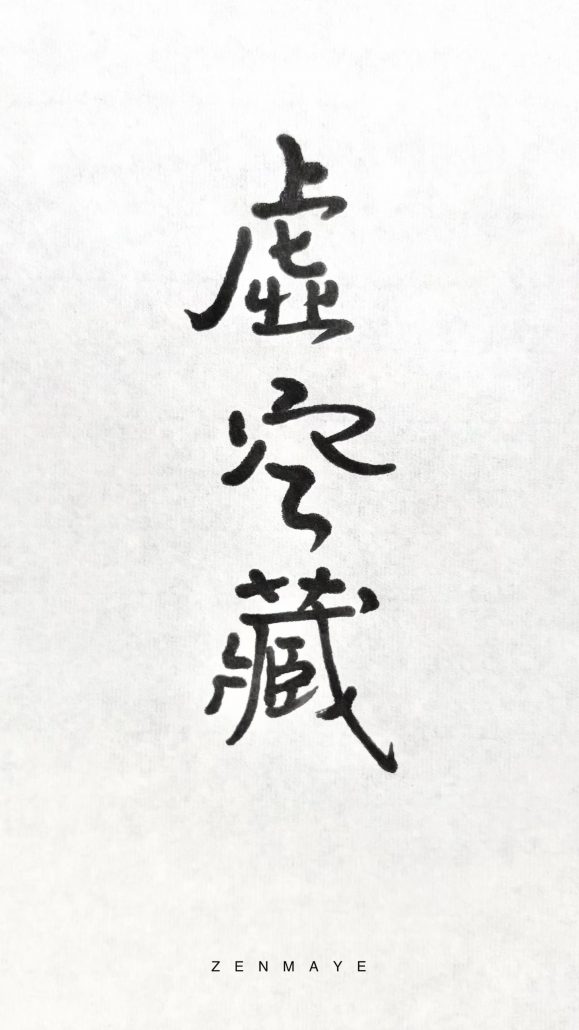
筆墨一瞬間
空氣也安靜了
虛空藏
不再是三個字
而是一個空間
—
佛教中,虛空藏菩薩象徵如虛空般無盡的智慧與包容。
「虛空」不是空無,
而是能容納萬物的存在。
如天空,不爭、不語,
卻承接一切。
而「藏」,
像時間深處緩慢沉積的東西。
記憶、慈悲、願力、痛苦,
與人心裡那些未曾說出的聲音。
真正安靜的人,
像虛空。
不是沒有情緒,
而是已經能讓情緒穿過自己。
像風中的松,
像光裡的塵。
—
翻出自己拍攝過的一尊虛空藏佛像。
昏暗的光線中,
安靜的金色光芒四射。
沉默地觀看。
很多時候,
我們以為自己在尋找某種答案。
但最後發現,
真正需要被找回的,
只是內心那片沒有被打擾的空。
—
東方美學裡,
「空」從來不是缺失。
茶席上的留白,
枯山水裡大面積平鋪的砂石,
香氣散去後殘留的氣息,
甚至一張照片裡大片的陰影——
都在說同一件事:
真正重要的,
往往不在被看見之處。
就像虛空藏。
不顯露,
卻存在。
—
我開始明白,
為什麼自己會不斷拍攝光、霧、樹影、灰與空氣感。
因為那些東西,
都沒有「形狀」。
它們更接近時間,
也更接近禪。
而人,
只有在安靜下來時,
才能真正看見那些看不見的存在。
—
寫完「虛空藏」之後,
房間裡的香剛好燃盡。
只剩下一點灰,
和一道傍晚的光。
那一刻忽然覺得——
有些東西,
不需要被證明。
它只是靜靜地在那裡,
就已經足夠了。
⸻
虛空藏|Between Emptiness and Memory
Ākāśagarbha — Between Emptiness and Memory
In a single moment of ink and brush,
the air itself became quiet.
Ākāśagarbha.
No longer just three characters,
but a space.
—
In Buddhism,
Ākāśagarbha Bodhisattva symbolizes wisdom and compassion as boundless as the sky.
“Emptiness” is not nothingness.
It is the capacity to hold all things.
Like the sky—
silent, without conflict,
yet receiving everything.
And “treasury”
feels like something slowly gathered within time itself:
memory, compassion, vows, suffering,
and the unspoken voices hidden deep within the human heart.
Truly quiet people
are like space itself.
Not without emotion,
but able to let emotion pass through them.
Like pine trees in the wind.
Like dust within light.
—
I found a photograph
of an Ākāśagarbha statue I once captured.
Within the dim light,
a silent golden radiance emerged.
A quiet act of watching.
Many times,
we believe we are searching for answers.
But in the end,
what we truly long to recover
is simply that untouched emptiness within ourselves.
—
In Eastern aesthetics,
emptiness has never meant absence.
The blank space on a tea table,
the vast gravel within a Zen garden,
the lingering trace after incense fades,
or the large shadows within a photograph—
all speak of the same truth:
What matters most
often exists beyond what is seen.
Like Ākāśagarbha.
Unrevealed,
yet present.
—
I began to understand
why I continue photographing light, mist, shadows, ash, and air itself.
Because those things
have no fixed form.
They are closer to time.
Closer to Zen.
And only in silence
can we begin to perceive
those invisible presences that quietly exist.
—
After writing “Ākāśagarbha,”
the incense in the room had just finished burning.
Only a little ash remained,
and a line of evening light.
And suddenly I felt—
Some things
do not need to be proven.
Their quiet existence alone
is already enough.